When people think of Florida, the list is topped by oranges, sunshine, and sandy beaches. But alligators are not far behind.
After a fatal alligator attack near Disney’s Grand Floridian Resort & Spa in 2016, alligators have become a serious concern for many tourists visiting the state. Anyone who has visited the parks know there is no shortage of lakes, ponds, and streams on Disney properties that make ideal habitats for these large reptiles.
Alligator attacks are also on the rise statewide.
Since alligators were removed from the endangered species list in 1987, unprovoked attacks have increased as populations of both humans and alligators have grown. According to a study published this year in the Journal of Wildlife Management, the number of yearly alligator bites reported in the state of Florida have doubled since 1971.
So do visitors have to worry about alligators at Disney? The short answer is no.
Despite viral videos of alligators near Splash Mountain or making surprise appearances in residential pools, encounters are rare, and attacks even rarer. Statistically, tourists should be more concerned about hurricanes and lightning, which are five times more deadly in Florida than alligators. Only one fatal attack occurred in the state since 2017. The city of Orlando has been the site of only 3% of attacks dating back to 1948.
Disney is also vigilant and removes alligators from areas where guests may encounter them.
Since the Grand Floridian attack, Disney has ramped up its efforts to remove alligators from their properties. Between 2016 and 2018, the Florida Fish and Wildlife Conservation Commission has relocated 139 alligators from Disney resorts and parks to other sites. Most of these were small and not a threat to humans.
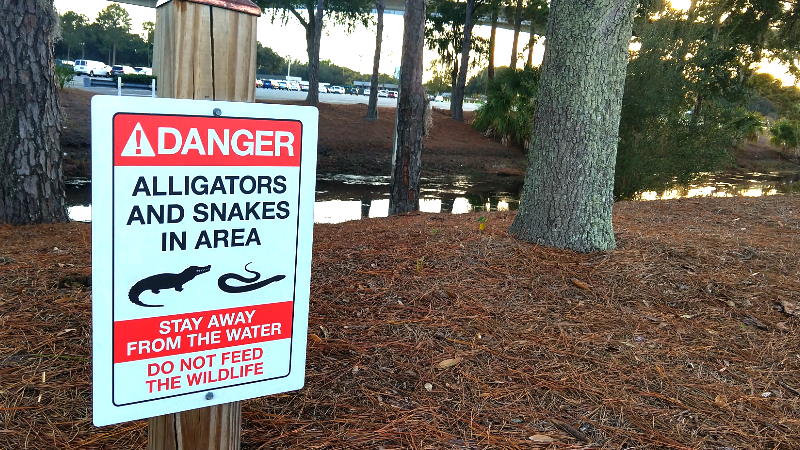
Disney also designs its water spaces to limit the probability and risk of an encounter. The banks of waterways are often steeply inclined or obstructed with rocks to make it difficult for alligators to make it to shore. They also place signs near danger areas.
For Disney patrons still concerned about alligators, there are some things to keep in mind.
The warmer months are more dangerous. Most serious bites and fatalities occur between June and August. Attacks also tend to occur near smaller, unnamed waters. Two-thirds of the victims were in the water when attacked, and more than half were in water deeper than 1 meter.
The Florida Fish and Wildlife Conservation Commission recommends being alert and avoiding swimming or wading in waterways, especially at night. They also warn against feeding them, which can make alligators more aggressive.
The commission operates the Nuisance Alligator Hotline at 866-FWC-GATOR, which may be contacted to trap and remove alligators over 4 feet in length that may pose a threat.